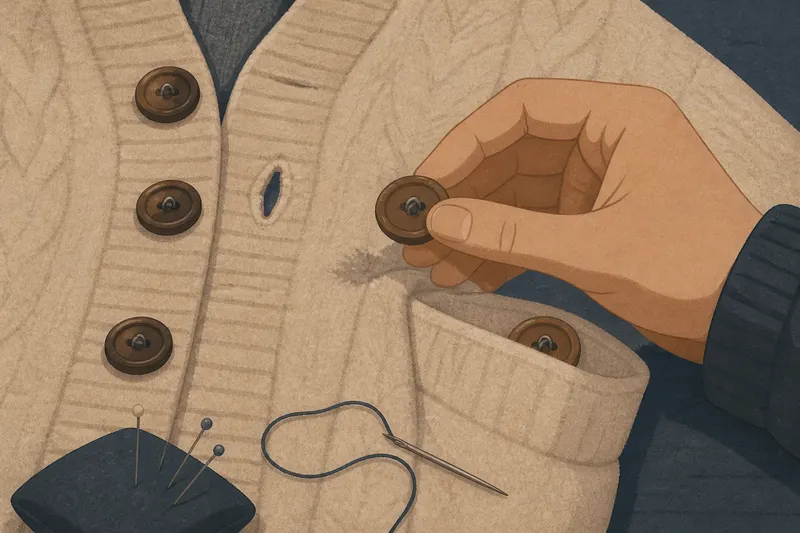
A Calm Afternoon Sorting a Small Mending Basket
Sort a small mending basket by task, keep useful supplies within reach, and set aside repairs that need specialist care without starting a large project.
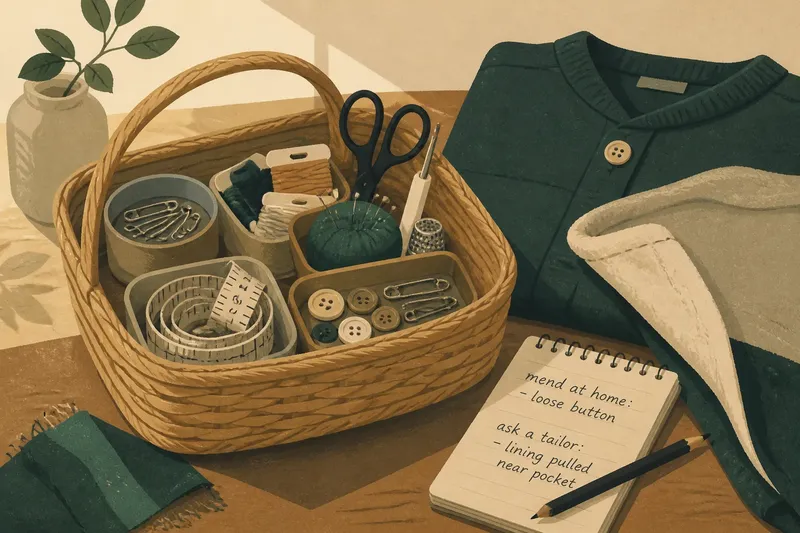
A small mending basket is easier to use when its contents answer a practical question: what can I repair here, with the tools I have? Sorting a mending basket need not mean buying matching boxes or cataloging every spare button. A quiet pass through a few ordinary supplies can make routine repairs easier to begin and help you spot work that belongs with a specialist.
What belongs in a small mending basket?
Keep the supplies you reach for during simple, familiar repairs. A basket might hold a small pair of scissors, hand-sewing needles, thread in a few useful colors, spare buttons, a needle threader, and a soft tape measure. Add a seam ripper if you already use one, plus a few safety pins for temporary holding.
The right contents depend on what you mend. Someone who repairs woven shirts may want a thimble and a small patch of matching fabric. Someone who mostly replaces buttons may need only needles, thread, and a tin for loose buttons. The basket should serve the work in your home, not an imagined list of supplies for every possible repair.
Before sorting, clear a table and gather only the mending items already scattered around the house. Leave craft supplies and general household hardware where they are unless they have a clear mending use. This boundary keeps the session small.
How should I sort supplies by task?
Group supplies by the kind of job they support, rather than by color or shape. A few shallow containers, envelopes, or reused jars can separate the groups without adding much cost.
- Stitching: Needles, thread, needle threader, and thimble.
- Fasteners: Spare buttons, snaps, and safety pins.
- Cutting and unpicking: Scissors and seam ripper, stored with their points protected.
- Small fabric repairs: Useful scraps or patches, kept clean and folded.
- Unresolved repairs: A note or item that needs a decision before work begins.
These are working groups, not a rule that every basket needs five compartments. If a supply has more than one use, place it where you are most likely to look for it. Avoid splitting a modest supply into so many containers that putting things away becomes a separate chore.
What should I keep, replace, or set aside?
Keep an item if it is usable, identifiable, and likely to help with a repair you handle yourself. Set aside supplies that are bent, blunt, tangled beyond easy use, or so unfamiliar that you cannot tell what they are for. A small, clearly marked container for uncertain items can prevent a long pause over every object.
Check thread for knots, fraying, and brittleness by handling a short end gently. Look over needles for bends or rough spots, and make sure scissors open and close smoothly. Keep sharp tools protected, and store pins and needles where they cannot spill into the basket. If a tool is damaged or unsuitable for its intended use, remove it rather than keeping it simply because it might be useful someday.
Do not treat a crowded basket as evidence that you need a larger one. The useful question is whether the supplies you rely on are easy to find and safe to store. Anything that does not serve a clear task can leave the basket.
How can I decide which repairs are suitable to do at home?
Use your own experience and the item's construction to judge whether a repair is straightforward. A loose button or a short seam opening may be familiar work. A repair involving delicate fabric, a lined garment, a complicated closure, or a material you do not know may call for a tailor, shoe repairer, or other specialist.
Say you find a shirt with a loose button and a coat whose lining has pulled away near a pocket. You could place the shirt with the simple mending to do at home, while writing “ask a tailor about lining” on a note beside the coat. The expected result is a clear division: one manageable task ready for the basket and one repair kept from becoming an uncertain experiment.
Setting something aside is not a failure to mend. It is a useful decision when the repair could affect fit, finish, or the item's structure, or when the right materials and method are unclear. If the item has care or repair instructions, use those as a starting point; the label or manufacturer may not address every kind of damage.
Where should the basket live, and what should stay out?
Choose a dry, accessible place where you can sit and work with good light. A shelf near a usual mending spot can be more useful than a hidden cupboard. Keep the basket away from damp areas, pets, and young children, especially when it contains needles, pins, or scissors.
What is not worth the effort is transferring every thread spool into a uniform system or labeling tiny containers that hold only one obvious item. A reused tin for needles and a small pouch for thread may be all the separation you need. Make the arrangement easy to put back after a repair, not impressive to look at.
What do people ask about sorting a mending basket?
Do I need a sewing box instead of a basket?
No; use whatever keeps supplies contained and easy to reach. A basket works well if sharp items have secure covers or a separate closed container.
How much thread should I keep?
Keep colors and types that suit the garments and fabrics you actually mend. Discard thread that is visibly damaged, and avoid holding onto tangled scraps you are unlikely to use.
Should I keep spare buttons from old clothes?
Keep buttons that are clearly tied to a garment or likely to match something you own. Put unidentified buttons together in a small container rather than letting them scatter through the basket.
What if I am unsure how to repair an item?
Set it aside with a short note describing the problem and the help you need. A tailor or repair professional can advise whether the item is suitable for repair and what approach makes sense.
How do I keep the sorting from becoming a larger project?
Stop when the useful supplies are grouped, the damaged or mysterious items are out of the working basket, and the repairs needing outside help are marked. You do not need to sort every textile in the house or create a complete inventory. If you notice another repair, add it to a short note rather than expanding the session.
A calm afternoon can leave you with a basket that supports the next small repair instead of demanding more attention. For a small mending basket, the best arrangement is the one that makes the next sensible action obvious: mend it yourself, find the right supply, or ask someone with the relevant skill.