Wood, Metal, or Ceramic: Choosing a Serving Board for the Way You Serve
Compare wood, metal, and ceramic serving boards by use, care, and storage so you can choose a surface that suits your food and kitchen routine.
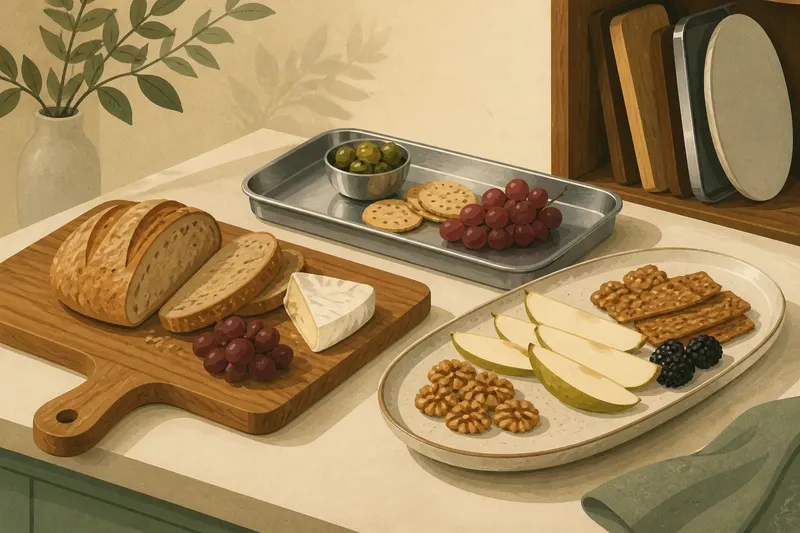
Wood, metal, or ceramic serving board: the best choice depends on what you serve, where the board rests between meals, and how much care you want to give it. A board that carries bread from counter to table has different demands from one used for chilled cheese or a warm dish. Start with the meal you picture using it for most often, then consider the surface’s weight, finish, and storage needs.
Think of a serving board as part of a routine, not just a shape in a cupboard. It may need to travel from kitchen to table, sit out while guests serve themselves, and return to a crowded shelf. Each material brings a different feel to those small tasks. The right one is the surface whose handling and upkeep fit the life around it.
What will the board carry most often?
Wood feels at home with bread, pastries, fruit, and room-temperature snacks. Its visual warmth can make a simple arrangement feel settled, and the surface is generally quieter than a hard metal or ceramic one when a knife or serving utensil touches it. Wood also has visible grain, so each board has a pattern and tone that belong to the material rather than a printed decoration.
Metal suits a cooler, more spare presentation. Stainless steel trays and boards can work well for chilled foods, wrapped items, or small servings that benefit from a crisp-looking surface. Metal transfers temperature readily, so a board kept in a cool place may feel cold to the touch. It can also ring or scrape under utensils, a detail that matters when serving in a quiet room.
Ceramic brings a finished, tableware-like presence. A glazed platter can hold cut fruit, olives, pastries, or other ready-to-serve foods, and its surface is easy to wipe after use. Ceramic is often less forgiving of bumps than wood or metal. If the board will be carried across a busy kitchen or placed near a sink, its weight and vulnerability to chipping deserve attention.
Use the word “board” broadly when comparing these options. Some products are cutting boards; others are platters intended for presentation. A serving surface should not be assumed suitable for chopping simply because it is flat. If food preparation is part of the plan, check the maker’s intended use and care directions.
How does each material behave during a meal?
Wood offers a grippy, tactile surface. That can help keep a loaf or a small arrangement from sliding while someone serves. Its natural variation may make crumbs and light marks less conspicuous, though deep cuts, stains, or lingering odors can be harder to ignore on a pale or porous finish. A board with a food-safe finish intended for serving is a more considered choice than an ornamental object with an unknown coating.
Metal is smooth and usually visually direct. It can suit a clean-lined table or a kitchen where serving pieces are already stainless steel. The tradeoff is that a slick surface may let small foods move when the board is tilted, and fingerprints or water marks can show. Rounded edges and a stable base matter if the board will be lifted while loaded.
Glazed ceramic has a smooth surface that can make loose crumbs and oily traces easy to see and wipe away. That same hardness can make the board feel less forgiving under a knife, and a chipped glaze changes the surface in a way that may affect continued use. Ceramic’s weight can help it sit firmly on a table, but it may feel awkward to carry one-handed alongside a serving bowl.
Imagine you often set out sliced pears and crackers on a narrow kitchen island, then carry the board into the living room. A light wooden board with a broad, steady base may feel easiest to move and comfortable under the food. If you instead serve chilled snacks directly from a cool pantry, a metal tray may better suit that habit; if the serving stays on the dining table, a glazed ceramic platter may be the more natural fit.
What care will fit into an ordinary day?
Wood generally asks for gentler treatment than a quick trip through a dishwasher. After serving, remove crumbs, wipe the surface with a damp cloth, and dry it promptly. If the board has food residue, use the cleaning method specified for its finish rather than soaking it. Prolonged wetness can encourage warping or surface damage, so avoid leaving a wooden board in a sink or on a wet counter.
Metal is often straightforward to wipe clean, but the exact finish matters. A polished surface may show scratches more clearly than a brushed one, and some metals can react poorly to harsh cleaners. Drying after washing can reduce visible water marks. Keep abrasive pads away unless the manufacturer says they are suitable; a scouring tool can change the surface appearance.
Ceramic glaze is typically easy to wipe, but the board’s edges and underside still need attention. Check for chips or cracks before serving, especially around the rim where knocks are more likely. If the item is dishwasher-safe, that can simplify cleanup, but stacking it carelessly with other dishes may lead to impact damage. The label or maker’s instructions settle questions about heat, dishwasher use, and food contact.
For all three materials, clean soon after serving foods that are oily, strongly colored, or aromatic. A little attention at the end of the meal is easier than trying to remove a dried stain later. Avoid treating decorative boards as food-contact surfaces unless they are made and finished for that purpose.
Where will the board live between meals?
Storage can decide the choice as readily as appearance. A wooden board may be kept upright in a dry slot or placed flat where air can reach it; the important point is that it is dry before being put away. If it has a handle or hanging hole, hanging can free shelf space, provided the board remains secure and does not press against a damp wall.
Metal can be easy to slide into a narrow cupboard, but thin trays may flex or rattle against other cookware. A protective separator can prevent noisy contact and scuffs. A heavier metal board is less likely to shift on a shelf, though its weight may make an upper cabinet an inconvenient home.
Ceramic needs a stable, accessible place with room around its edges. Avoid wedging it between heavy pans, where a small shift can cause a chip. A shelf near the dining area may be useful if the platter is used often, while a rarely used piece is better stored where it will not be repeatedly moved aside. Choose a location you can reach without lifting it over fragile dishes.
What is not worth the effort is choosing a material solely to match a single table setting, then storing it somewhere awkward. A surface that is inconvenient to retrieve tends to become an occasional decoration. A good serving board earns its place through repeated, ordinary use.
Which questions help narrow the choice?
Is wood or ceramic better for bread?
Wood offers a warm, tactile surface and is comfortable for placing a loaf or pastries. Ceramic works well for bread served as part of a composed table setting, but its hard surface can feel less suited to cutting or casual handling.
Can a metal serving board be used for cheese?
Yes, if the product is intended for food service and its finish is suitable for contact with food. Metal may feel cool, but it can also be slick, so arrange small pieces with enough space to keep them from sliding.
Which material is easiest to store?
That depends on the shape and weight rather than material alone. A slim metal tray may fit a narrow slot, while a light wooden board can be easy to stand upright; a broad ceramic platter needs a stable shelf with room around it.
Can I cut directly on a serving board?
Only if the maker identifies it as suitable for cutting and the surface is intended for food preparation. A decorative finish, delicate glaze, or thin metal surface may be marked or damaged by a knife, so use a separate cutting board when the purpose is unclear.
How can you choose without buying for every occasion?
Make the decision around one recurring use. List the foods you serve most, whether the board needs to travel, and the storage place available. Then compare materials against those needs rather than trying to find one surface that performs every role equally well.
- Choose wood for a warm, everyday surface that suits bread, fruit, and casual sharing, if you can dry it promptly and store it out of dampness.
- Choose metal for a sleek, easy-wipe presentation, if its cool feel, possible marks, and contact noise suit the setting.
- Choose ceramic for a finished platter that stays mostly on the table, if its weight and careful storage are manageable.
- Choose by intended use when you want to cut as well as serve; presentation pieces and preparation boards are not interchangeable by default.
For a home where the board moves between counter and table, wood is often a comfortable general-purpose serving choice. For a board that remains in one place, metal or ceramic may make more sense, depending on the foods and the look of the table. This is not a ranking of quality. It is a way to match a surface to the repeated motions around it.
Before settling on one, imagine the cleanup and the return trip to storage as clearly as the meal itself. If both feel simple, the material is likely to suit your routine. The most useful serving board is the one you can take down, use, clean, and put away without turning an ordinary snack into a special occasion.