The Long Life of the Button
The long life of the button shows how to choose a compatible replacement, protect the fabric, and keep an ordinary garment in use.
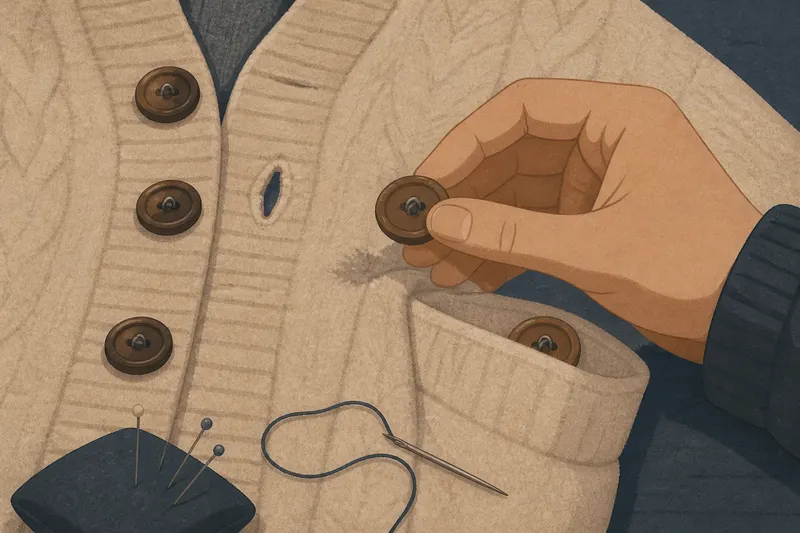
A missing button on a wool cardigan leaves a small gap, but the garment may still be wearable. The long life of the button depends on choosing a replacement that closes securely without straining the buttonhole or weighing down the fabric.
A button is ordinary and replaceable. Yet its shape, material, placement, and repair can tell you how a garment was meant to close, how it was worn, and what someone chose to keep. The aim is not to treat every button as an heirloom. It is to notice when a small part is doing more than one job, then make a repair that respects the garment.
What does a button do before it decorates?
A button holds two edges together by passing through a slit or loop. The buttonhole is part of the fastening: its size, position, and stitching determine how the button works. One that is too large may strain the opening; one that is too small can slip free. The garment’s cut and the wearer’s movement matter, too. A closure must hold while allowing the fabric to sit and move as intended.
That practical role sets design constraints. A coat needs a closure that can be grasped with cold or gloved fingers. A shirt may use smaller buttons where bulk would interfere with a cuff or collar. The right choice for a child’s garment depends on its intended use and whether small hands can manage the fastening.
Buttons also distribute strain. A row of closures shares the pull along a front opening; a single button at a cuff or waistband takes pressure at a particular point. If one is missing, the surrounding fabric and buttonhole can show where the load fell. A stretched hole, loose stitching, or puckered edge is a reason to inspect the attachment point before selecting a replacement.
When does fastening become ornament?
A button can be useful and decorative at once. Its color may echo a weave, its surface may catch light, or a row of small forms may give a plain front a visual rhythm. Some buttons only look functional: they are sewn onto the surface while a hidden snap, hook, or zipper does the closing. That distinction matters if you are deciding whether to replace the visible button or repair the actual fastener.
Placement changes what the eye reads. A button near a pocket edge can make the pocket look finished even if it does not close. A line of buttons down a jacket front establishes a repeated pattern. A contrasting button draws attention to the closure; a quiet one can recede into the cloth.
Decorative buttons still affect the fabric. A heavy ornament on light cloth can pull it out of shape, especially if the stitches are anchored only to a delicate layer. A raised button may catch on a bag strap or knit. A flat, light replacement may be kinder to the garment even if it is not an exact visual match. Ask not only whether it matches, but whether it sits well in that spot.
What can a button reveal about a garment’s material history?
Shell, wood, metal, glass, and molded plastics each have a different feel, weight, and response to wear. A smooth surface may become scratched or dulled; a painted finish can chip; a metal shank may discolor nearby cloth. These signs do not establish an exact age or origin by themselves. They can help explain how a button has met daily use.
Look at the back as well as the face. A two-hole or four-hole button lies close to the fabric and is sewn through its holes. A shank button has a loop beneath it, leaving space between the face and the cloth. That clearance can help thick fabric pass under the button, but on a light garment it may let the button tilt or snag. The construction often says more about intended placement than the front design does.
Thread is part of the record. Bright new thread on a worn button can indicate a repair; faded thread may blend into the garment while still holding firmly. Different thread colors or stitch patterns can suggest a replacement, though they do not tell you who made it or why. A mismatch can be evidence that the garment remained useful enough for someone to mend.
A surviving spare, attached to a label or tucked into a pocket, preserves an option. It may match the visible set or be a substitute intended to disappear. Keep it with the garment if it is sound, but do not use a deteriorated button simply because it came with the piece.
How do you choose a replacement button?
Start with the job. Compare the missing buttonhole with a button still in place, if one remains. Check the fabric’s thickness, whether the original button used holes or a shank, and whether the closure needs to be discreet or easy to grip. The replacement should pass through the opening without force and stay put during ordinary movement.
- Check the fit: Try the replacement in the buttonhole. If it passes through without force and stays closed, use it; if it strains the opening or slips out, choose a different size or shape.
- Check the weight: Hold the button against the fabric. If the cloth hangs without pulling, proceed; if it sags or puckers, choose a lighter button or reinforce the attachment area.
- Check the back: Compare a remaining button’s holes or shank with the candidate. If the construction gives the needed clearance, use it; if it tilts or catches, choose a flatter or more suitable style.
- Check the visual pattern: Compare finish, color, and spacing with neighboring buttons. If the candidate fits the pattern, use it; if it looks like an unintended outlier, try a quieter match or repeat the contrast elsewhere only if the garment allows it.
- Check the attachment point: Inspect the cloth and buttonhole for fraying or tears. If they are sound, sew on the replacement; if they are damaged, repair the weak edge first or seek help from a tailor.
- Check the button’s condition: Look for cracks, sharp edges, or corrosion. If the surface is smooth and sound, it can remain in service; if it may snag or stain the cloth, replace it rather than reusing it.
Imagine you find a missing button on a wool cardigan. For this invented situation, assume the pocket holds one spare, a nearby buttonhole is loose but not torn, and the remaining buttons have shanks. First, compare the spare’s face and back with a button still attached; the spare matches and has the same shank. Next, pass it through the loose buttonhole without forcing it; it closes, but the edge begins to fray. Then inspect the fabric: the cardigan is thick enough to support the button, while the damaged hole needs its edge secured. The resulting decision is to use the spare and repair the buttonhole before sewing it on. If that edge cannot be secured without distorting the knit, the tradeoff changes: ask a tailor to reinforce it rather than risk further damage.
For sewing, use a needle that passes through the fabric and button without force, and thread suited to the garment’s use. Leave a little room beneath a flat button when it must sit over thick cloth; sewn too tightly, it can compress the fabric and make fastening awkward. Secure the thread on the reverse without pulling the cloth into a pucker. The attachment should be firm, not tight enough to gather the fabric.
Which button questions are worth asking?
Can mismatched buttons look intentional?
Yes, if their scale and placement make sense together. A single replacement can blend in, while a repeated contrast can look deliberate; an isolated mismatch that draws the eye may be less successful.
Should you keep spare buttons?
Keep a sound spare with the garment when it is clearly meant for that piece, and store it so it cannot scratch or snag the fabric. If no matching button remains, a note about the spare’s location or purpose may help later.
When is the button not the real problem?
If a button repeatedly comes loose, inspect the cloth, buttonhole, and stitch placement. A torn edge or a closure under unusual strain may need attention before another button is attached.
Are all old buttons worth preserving?
No. A button that is cracked, sharp-edged, badly corroded, or likely to damage the cloth may be better removed and replaced. Keep one only if there is a practical or personal reason for doing so.
What is not worth the effort?
It is rarely useful to hunt indefinitely for a perfect match when a sound, compatible button will do. Nor does every button need to be cataloged or saved after a garment is beyond repair. Put attention where it changes how the garment works: secure the fastening, protect the buttonhole, and choose a replacement that does not burden the fabric.
A button’s material history includes the cloth it has held, the hands that fastened it, and the decisions made when it loosened or disappeared. Preserve the original when it still serves, replace it when it does not, and let the repair remain visible if that is the most honest fit for the garment.